

Evolution of The Pieces
Brainstorming
-
Topic Choice & Free-Writing: You share a sample of your own writing to model a steady flow, and the students choose a personal topic they are interested in (such as their weekend) and do a low-stakes free-write to get their thoughts out freely.
-
The 5 W's Hand Organizer: Students draw a hand on paper (or use the 5 W's activity sheet) and label each finger/box with Who, What, When, Where, and Why to gather the main details for their personal narrative.
-
Bilingual Support: You encourage them to use invented/phonetic spelling during this stage so they don't lose their momentum or feel afraid to write.


Prewriting

-
3-Part Story Outline: Students take the ideas from their 5 W's and organize them into three shapes or sections on paper: Introduction, Middle, and End .
-
Bullet Pointers: Inside each section, they jot down short pointer notes on what will happen first, next, and last so they have a clear roadmap before writing full paragraphs.
Drafting
-
Modeling & Guided Writing: You share an example story (such as "A Family Adventure to Virgin Gorda") broken into a clear beginning, middle, and end.
-
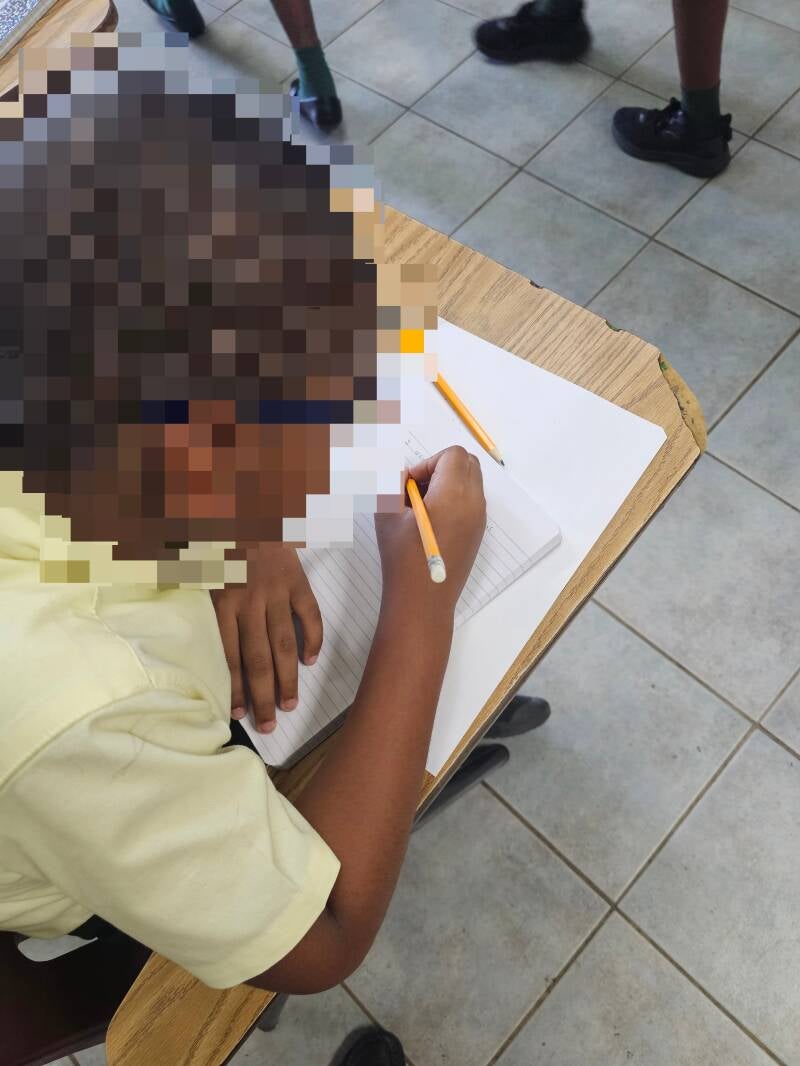
Writing the First Draft: Using the guided First Draft sheet, students turn their pointer notes into three full paragraphs (Introduction, Middle, and End), writing continuously for 10–15 minutes without worrying about perfection.
Revising
-
Read-Aloud & Conferencing: Students read their first draft aloud to you one-on-one.
-
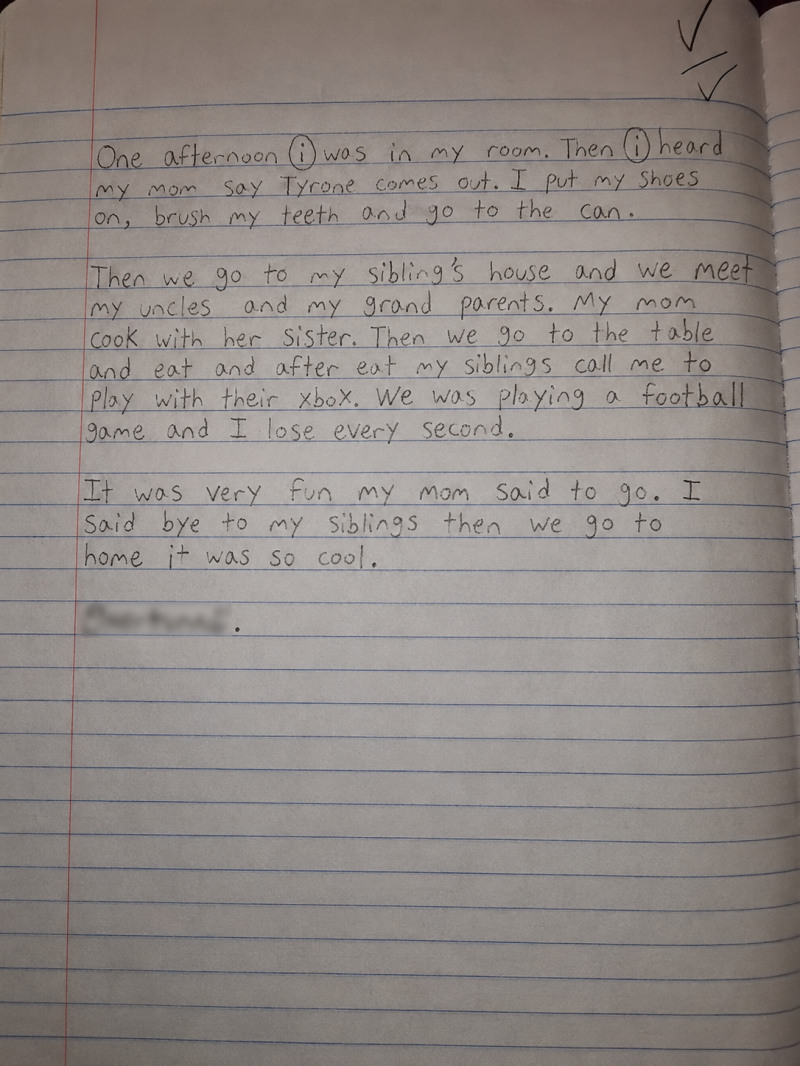
Improving the Story: You give them encouraging feedback (such as pointing out what is strong first) and help them add more details, transition words, or clearer sentences so their story flows smoothly from beginning to end.

Editing
-
Fixing Mechanics & Spelling:Students review their revised draft to check capitalization,punctuation,and spelling using the student progress checklist.
-
Correcting Invented Spelling:To fix the words they spelled by sound earlier,students either look up the words in a student dictionary or ask you directly how to spell them correctly.


Publishing

Clean Final Copy:Students neatly write out their finished, corrected personal narrative onto clean writing paper so it is ready to be shared and added to your digital portfolio.
Assessment Materials

-
Folder: Serves as a personal portfolio where students store their ongoing work to track progress and retrieve previous papers.
-
Book (Notebook): Provides a low-pressure space for students to freely brainstorm ideas and edit their second drafts without the stress of working on a graded assignment.
-
Worksheets: Act as formative assessment tools—including checklists, first-draft templates, and blank writing papers—that guide students in structuring their stories.
-
Crayons: Allow students to creatively illustrate their stories.
-
Pencils: Used as the primary writing tool for drafting the story.
-
Pencil Buddy: Acts as a comforting writing companion for the students during the drafting process.
-
Markers: Provide an alternative coloring option with deeper, bolder tones for illustrating stories.
-
Pens: Function as a color-coded relief system for bilingual students to discreetly mark uncertain spellings or errors for the teacher to add to a word bank without interrupting their writing flow.
Assessment Tools


Feedback: 2 Stars and A Wish
We are a dedicated team committed to crafting exceptional experiences. Our focus lies in providing reliable and innovative solutions, driven by a deep respect for quality and a genuine desire to exceed expectations.


Student A
Beginning
End


Student B
Beginning
End (Most Recent Work)

Create Your Own Website With Webador